Residential Junk Removal in Tampa, FL
From one crowded room to a full household reset, the first useful step is a clear picture of the items and the path out.
Prepare an estimate
Scope before schedule
Residential pickup can cover loose household items, boxed clutter, furniture, disconnected appliances, garage contents, and other non-hazardous material. The exact plan depends on item type, total volume, stairs, doorways, parking, and whether anything needs to be separated for a different disposal stream.
Commonly planned
- Boxed household clutter
- Furniture and mattresses
- Disconnected household appliances
- Garage and storage-room contents
- Clean yard debris when arranged in advance
Needs another plan
- Paint, fuel, solvents, batteries, and other hazardous waste
- Biohazardous or medical waste
- Pressurized cylinders
- Items attached to the building or requiring permitted demolition
- Any item whose condition makes movement unsafe without assessment
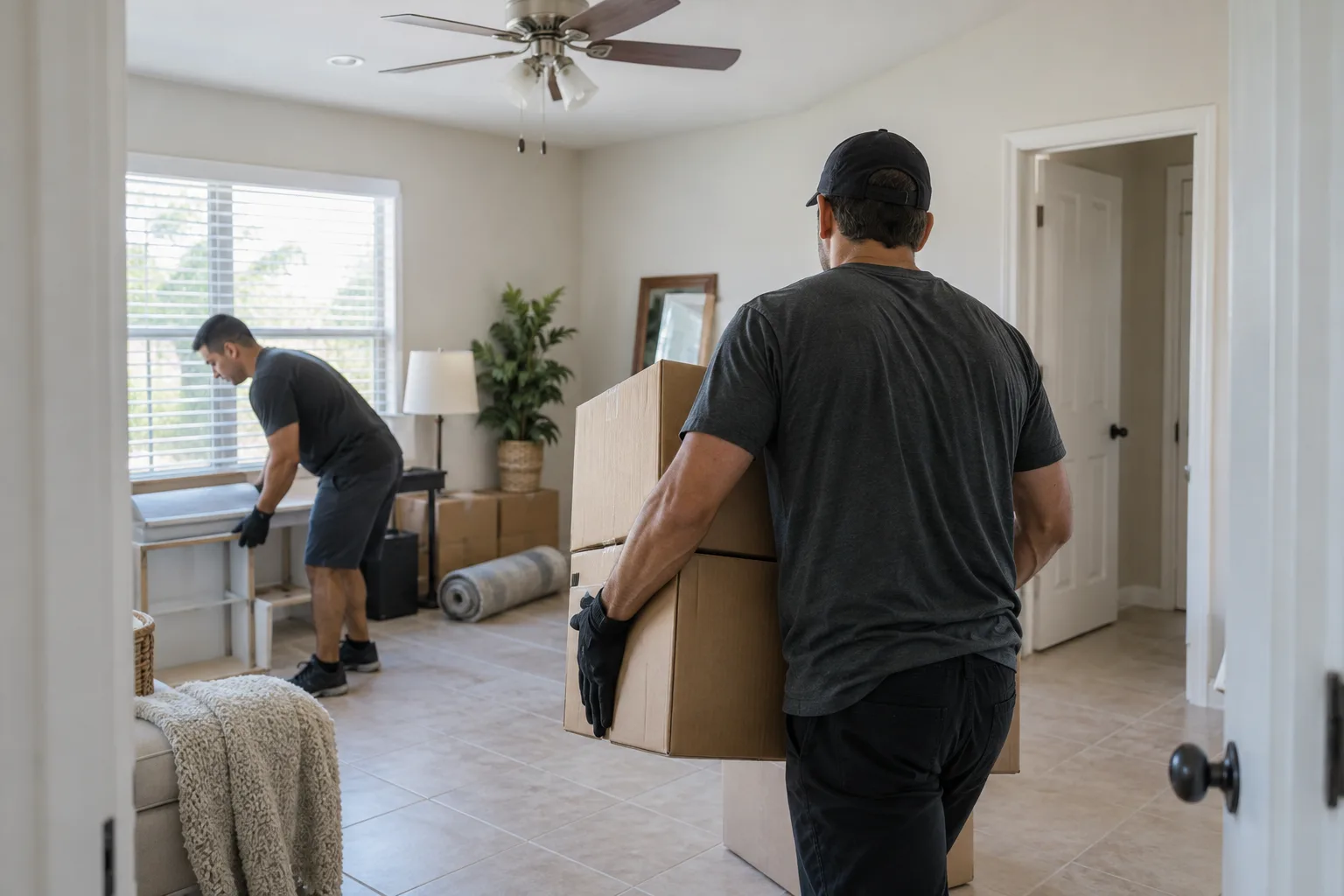
Prepare the route
- Mark anything that must stay before the crew arrives.
- Photograph the full group of items, not only the largest piece.
- Measure narrow doors, hall turns, stairs, gates, and elevator openings.
- Keep children, pets, vehicles, and fragile décor out of the route.
- Point out liquids, batteries, sharp edges, and unknown containers before work begins.
What changes the estimate
Item count is only one part of the job.
Questions for this load
Do items need to be at the curb?
Not necessarily. Indoor removal may be possible when the route is safe and access details are shared in advance.
Can everything go in one load?
Mixed household loads often need separation. Paint, chemicals, batteries, pressurized cylinders, and some electronics should be identified before pickup.
Is the estimate based only on item count?
Item count helps, but volume, weight, access, disassembly, and disposal requirements can change the work.