Furniture Removal in Tampa, FL
The hard part is often the route, not the item. Doorways, turns, stairs, loose parts, and parking all belong in the plan.
Prepare an estimate
Scope before schedule
Furniture removal covers bulky household pieces that are ready to leave the home. Share the item type, quantity, room, floor, condition, and exit path before scheduling. A sofa in a ground-floor garage is a different move from a sectional in an upstairs room with a tight landing.
Commonly planned
- Sofas, sectionals, loveseats, and recliners
- Bed frames, headboards, and mattresses
- Dressers, wardrobes, and shelving
- Dining tables, desks, and chairs
- Patio furniture that is safe to handle
Needs another plan
- Furniture attached to walls or floors
- Items containing pests, bodily fluids, or unknown contamination without prior assessment
- Safes, pianos, or unusually heavy pieces unless specifically approved
- Loose glass that is not secured
- Built-ins that require demolition
Prepare the route
- Empty drawers, cabinets, and shelves.
- Measure the item and every narrow point on the route.
- Remove loose shelves, cushions, and personal contents.
- Mention glass, stone tops, sleeper mechanisms, or damaged frames.
- Reserve elevators or loading access when the property requires it.
What changes the estimate
Item count is only one part of the job.
Use the preparation checklist for this service.
Read the guideQuestions for this load
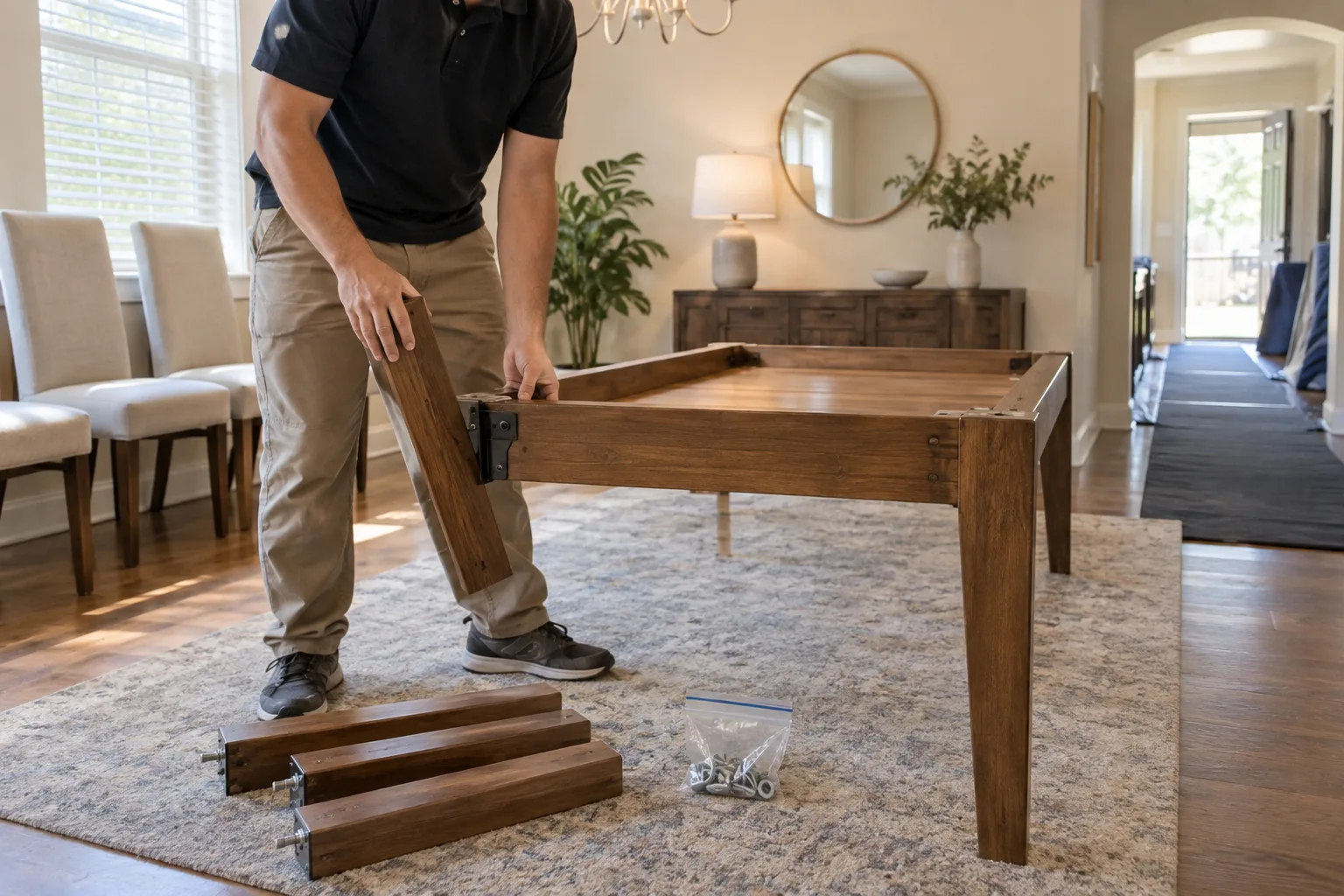
Should I take the furniture apart first?
Only when you can do it safely and keep hardware controlled. Share photos first; some pieces move better intact.
Can a sofa be removed from an apartment?
Often, yes. Building rules, elevator reservations, loading zones, and hallway turns should be checked before the pickup window.
What about glass tables?
Flag glass or stone surfaces early. Loose glass needs secure handling, and cracked pieces may require a different plan.